Read-alike guide
Books Like The Midnight Library
Almost every list answering this question mixes up two completely different kinds of book. Here's how to tell which one you're actually looking for.
Short answer
If you loved the premise — a place outside life with one clean rule, where you examine your choices — read Before the Coffee Gets Cold, The Measure or Sea of Tranquility. If you loved the feeling — consoled, gently handled, told it isn't too late — read Oona Out of Order, How to Stop Time or Life After Life.
The Midnight Library succeeded at two things at once, and readers rarely loved both equally.
One is a piece of speculative machinery: a room between life and death, one rule, infinite doors. The other is a tone — reassuring, direct, unembarrassed about telling you that your life is worth staying in. Books that nail the machinery are often much colder than Matt Haig. Books that nail the tone often have no premise at all.
Decide which half you're chasing, then use the tags below.
Seven novels for Midnight Library readers
-
Before the Coffee Gets Cold
The premiseA Tokyo café where you may travel back in time, provided you sit in one particular chair, change nothing, and return before your coffee goes cold. The rule-set is tighter than Haig's and the constraint is what makes it move. Four linked stories, each short enough to read in a sitting.
-
The Measure
The premiseEveryone on earth wakes to a box containing a string whose length is the length of their life. Same shape of thought experiment as the Midnight Library, worked through socially rather than privately — what happens to jobs, dating, insurance. Divisive ending, deliberately.
-
Sea of Tranquility
The premiseTime travel handled with real formal control, moving between 1912, the present and a lunar colony. Cooler and cleverer than Haig; if the Midnight Library felt too explained to you, this is the corrective.
-
Oona Out of Order
The feelingEvery New Year, Oona wakes in a different year of her own life, out of sequence. It uses a gimmick to do exactly what Haig does — make you take stock — but it is warmer, funnier and less interested in arguing a thesis.
-
How to Stop Time
The feelingHaig's own earlier novel, about a man who ages roughly one year per fifteen. If what you loved was the voice rather than the concept, this is the most direct answer to the question and the most reliably satisfying.
-
Life After Life
The feelingUrsula Todd dies and restarts, over and over, through the twentieth century. Far more ambitious as a novel than The Midnight Library and much less consoling, but it is the literary version of the same idea and it repays the effort.
-
The Invisible Life of Addie LaRue
The feelingA bargain, a curse, three hundred years of being forgotten by everyone you meet. Longer and more romantic than Haig, and it earns its emotional ending. The most popular next-read among Midnight Library fans for a reason.
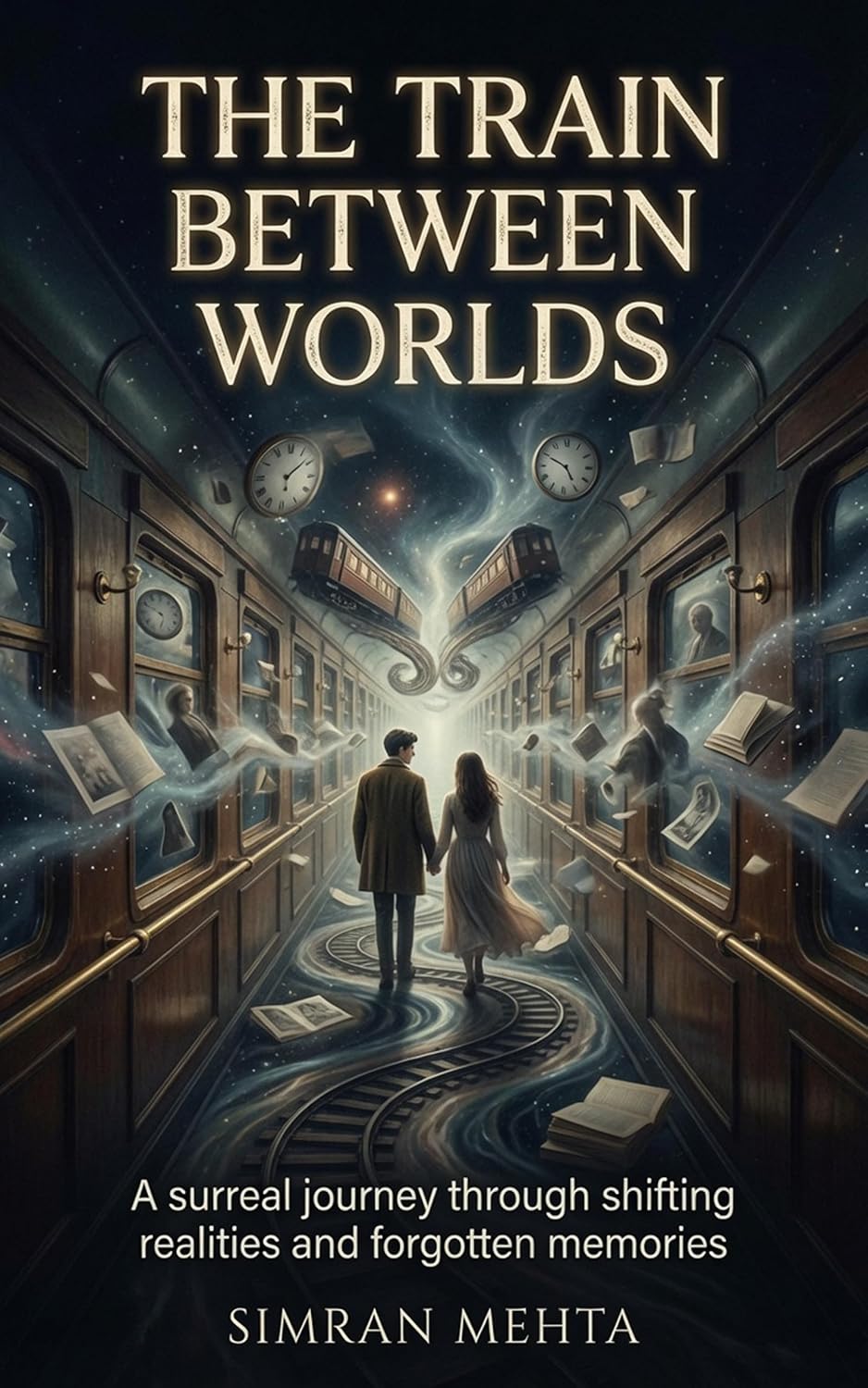
Book One · The Train Between Worlds
The Train Between Worlds
Lost on an endless train where realities blur, memories surface, and every choice reveals who you truly are.
If it was the premise half you loved — a place that is not life, with one rule, where you're made to work out who you are — that is the exact machinery of this series.
The difference is the price. Haig's library is free to browse. Here, every door costs one true memory of the person you'd go back for, you don't feel it go, and you never learn which one you paid.
Where the line begins — a complete story in itself
What to expect from The Train Between Worlds
Where it lines up with The Midnight Library, and where it doesn't:
- Same as The Midnight Library
- A place outside ordinary life. One clean rule governing everything. A protagonist forced to audit their own life.
- Different
- No narrator reassures you. The rule takes something real from you every time you use it.
- Tone
- Surreal and dreamlike rather than consoling — closer to Piranesi than to Haig.
- If you want the heartbreak instead
- Read The Memory Fare, Book Two — the one readers compare to Before the Coffee Gets Cold.
- Content notes
- Memory loss, dissociation, psychological disorientation.
- Formats
- Kindle. Free to borrow with Kindle Unlimited.
FAQ
Questions readers ask
Do you have to read The Train Between Worlds books in order?
No. All three novels share a world, a currency and a train, but not a plot. Each one is written to work as a complete first book, and none of them spoils the others. Reading in publication order gives you the world in the order it was invented; starting anywhere else costs you nothing.
What is The Train Between Worlds actually about?
A train nobody remembers boarding, with more carriages than anyone has counted. Passengers stay because leaving is expensive: every door aboard costs one true memory of the person you would go back for. Not a fact or a date — the kind of memory you can walk around inside. The series follows three people paying that fare for very different reasons.
Is The Train Between Worlds free on Kindle Unlimited?
Yes. All three novels are free to borrow with a Kindle Unlimited subscription, and each can also be bought outright on Kindle. The Memory Fare and The Forty-Year Passenger are available in paperback too.
What should I read after The Midnight Library?
It depends which part of it you loved. If it was the premise — a place outside life where you get to examine your choices — you want speculative fiction with a clean central rule. If it was the feeling, you want quiet, consoling novels about second chances. Those are two different shelves, and the read-alike lists usually confuse them.
What are liminal space books?
Fiction set in places built for passing through and then never left — corridors, waiting rooms, stairwells, transit that never arrives. The defining feature is not horror but suspension: the architecture is doing something the characters cannot explain, and the rules of the place matter more than the plot.
Are there novels set entirely on a train?
A few. Most “train books” are murder mysteries that use a carriage as a locked room for a few hundred pages, or travel memoirs about real railways. Novels where the train is the whole world — no destination, no getting off — are much rarer, and they behave very differently.
What is the best novel about dementia?
There is no single answer, because readers come to these books for opposite reasons — some want the illness rendered accurately from the inside, some want the caregiver's side, and some want a story that is about forgetting without being a medical narrative at all. The right book depends on which of those you need.
Which book is about a mother searching for her missing daughter?
The Memory Fare, Book Two. Cora Marsh has spent six years at a railway lost property office looking for anything of her daughter's. When she finally boards the train on purpose, she learns that every door she opens to search for June costs her one real memory of her — and she will never know which one she paid.