Theme guide
Books About Memory Loss
Amnesia thriller, unreliable narrator, whole-society forgetting, clinical decline — four different books wearing the same label.
Short answer
For an amnesia thriller, read Before I Go to Sleep. For a whole society forgetting, read The Memory Police or The Buried Giant. For memory you can't trust, read The Sense of an Ending. For the real illness, read Still Alice or Elizabeth Is Missing.
"Books about memory loss" collapses four genres into one phrase, and they have almost nothing in common. A thriller about a woman who wakes blank every morning is doing something completely different from a literary novel about a man who has quietly edited his own past.
Below they're separated, so you can find the one you actually meant.
Seven novels about memory and forgetting
-
Before I Go to Sleep
Amnesia thrillerChristine wakes every morning with no memory past her twenties, and keeps a journal her husband doesn't know about. The purest execution of the premise — tightly plotted, genuinely tense, and over quickly.
-
The Memory Police
Collective forgettingOn an island, categories of thing disappear — ribbons, birds, novels — and almost everyone forgets they ever existed. A quiet, implacable book about living inside a rule you cannot argue with. One of the great novels of the last twenty years.
-
The Buried Giant
Collective forgettingAn elderly couple cross a post-Arthurian Britain covered by a mist that steals memory. Ishiguro asks whether a peace built on forgetting is worth keeping — at the scale of a marriage and a nation at once.
-
The Sense of an Ending
Unreliable memoryA retired man is forced to revisit a version of his youth he has been comfortably misremembering for forty years. Short, controlled, and quietly brutal about the self-serving edits everyone makes.
-
The Housekeeper and the Professor
The real thingA mathematician whose memory resets every eighty minutes, and the housekeeper and her son who befriend him daily. Warm rather than tragic, and the maths is genuinely lovely. The gentlest book on this list.
-
Still Alice
The real thingEarly-onset Alzheimer's from inside the narration of a linguistics professor who is losing exactly the faculty she built her life on. Clinically accurate; hard going in the second half.
-
Elizabeth Is Missing
The real thingMaud cannot hold a new memory for long, but is convinced her friend has vanished. It braids a decades-old mystery with a present-day one, and its narrator forgets the clues as fast as she finds them.
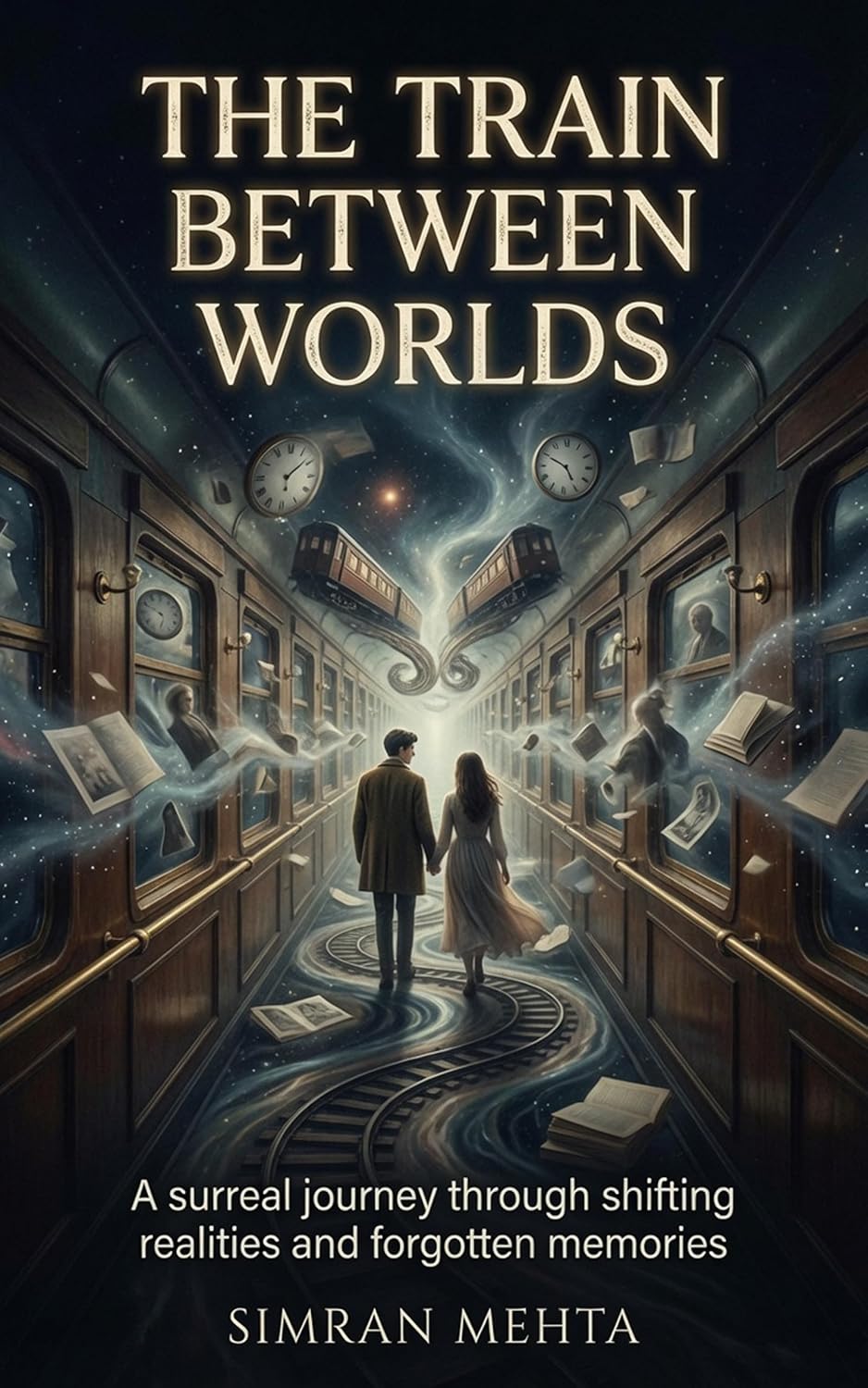
Book One · The Train Between Worlds
The Train Between Worlds
Lost on an endless train where realities blur, memories surface, and every choice reveals who you truly are.
This series adds a fifth category: memory as a currency rather than a symptom. Nobody aboard is ill. They are spending.
The Train Between Worlds starts at the far end of that — a narrator with no name and no past at all, working out from fragments why part of them never wants to leave. If you'd rather see the transaction from the other side, The Memory Fare follows a woman who knows exactly what each door is costing her and opens them anyway.
Where the line begins — a complete story in itself
What to expect from The Train Between Worlds
Where it fits among the four kinds above:
- Not clinical
- No diagnosis, no decline, no medicine. The forgetting is a price, not an illness.
- Closest comparison
- The Memory Police for the implacable rule, Piranesi for the setting.
- The premise
- Wake on a train with no name and no past, and a ticket reading Destination: Unknown.
- The rule
- Every door aboard costs one true memory of the person you'd go back for.
- Content notes
- Memory loss, dissociation, psychological disorientation.
- Formats
- Kindle. Free to borrow with Kindle Unlimited.
FAQ
Questions readers ask
Do you have to read The Train Between Worlds books in order?
No. All three novels share a world, a currency and a train, but not a plot. Each one is written to work as a complete first book, and none of them spoils the others. Reading in publication order gives you the world in the order it was invented; starting anywhere else costs you nothing.
What is The Train Between Worlds actually about?
A train nobody remembers boarding, with more carriages than anyone has counted. Passengers stay because leaving is expensive: every door aboard costs one true memory of the person you would go back for. Not a fact or a date — the kind of memory you can walk around inside. The series follows three people paying that fare for very different reasons.
Is The Train Between Worlds free on Kindle Unlimited?
Yes. All three novels are free to borrow with a Kindle Unlimited subscription, and each can also be bought outright on Kindle. The Memory Fare and The Forty-Year Passenger are available in paperback too.
What should I read after The Midnight Library?
It depends which part of it you loved. If it was the premise — a place outside life where you get to examine your choices — you want speculative fiction with a clean central rule. If it was the feeling, you want quiet, consoling novels about second chances. Those are two different shelves, and the read-alike lists usually confuse them.
What are liminal space books?
Fiction set in places built for passing through and then never left — corridors, waiting rooms, stairwells, transit that never arrives. The defining feature is not horror but suspension: the architecture is doing something the characters cannot explain, and the rules of the place matter more than the plot.
Are there novels set entirely on a train?
A few. Most “train books” are murder mysteries that use a carriage as a locked room for a few hundred pages, or travel memoirs about real railways. Novels where the train is the whole world — no destination, no getting off — are much rarer, and they behave very differently.
What is the best novel about dementia?
There is no single answer, because readers come to these books for opposite reasons — some want the illness rendered accurately from the inside, some want the caregiver's side, and some want a story that is about forgetting without being a medical narrative at all. The right book depends on which of those you need.
Which book is about a mother searching for her missing daughter?
The Memory Fare, Book Two. Cora Marsh has spent six years at a railway lost property office looking for anything of her daughter's. When she finally boards the train on purpose, she learns that every door she opens to search for June costs her one real memory of her — and she will never know which one she paid.