Theme guide
Fiction Books About Dementia
Search this and you mostly get caregiving manuals. These are novels — and they divide much more sharply than the lists suggest.
Short answer
For the illness from the inside, read Still Alice, Elizabeth Is Missing or Turn of Mind. For the family and carer's side, read We Are Not Ourselves or The Wilderness. For a story about forgetting that isn't a medical narrative, read The Buried Giant or Etta and Otto and Russell and James.
People arrive at this search for opposite reasons. Some have just had a diagnosis in the family and want to understand what it is like from inside. Some are exhausted carers who want to feel less alone. And some want a novel that is about forgetting without being a hospital story at all.
Those three needs pull towards completely different books, and a list that mixes them will hand a grieving carer a clinical first-person account of decline at the worst possible moment. So they're separated below.
Seven novels about dementia and forgetting
-
Still Alice
From the insideA Harvard linguistics professor is diagnosed with early-onset Alzheimer's at fifty. Genova is a neuroscientist and it shows — the decline is rendered with real clinical precision from inside Alice's narration. The standard recommendation, and deservedly.
-
Elizabeth Is Missing
From the insideMaud has dementia and is certain her friend Elizabeth has disappeared, though nobody will listen. A genuine mystery told by a narrator who cannot hold the clues in her head — and it works both as a puzzle and as an unusually kind portrait.
-
Turn of Mind
From the insideA retired orthopaedic surgeon with dementia is the prime suspect in her best friend's murder, and cannot remember whether she did it. Harder and colder than Elizabeth Is Missing, and structurally daring.
-
We Are Not Ourselves
The carer's sideA long, patient family novel across decades of Irish-American life in Queens, in which early-onset Alzheimer's arrives roughly halfway and rearranges everything. The best book here on what it costs the spouse.
-
The Wilderness
The carer's sideAn architect's memory disintegrates, and the novel's own reliability goes with it — scenes recur with details changed. Demanding, beautifully written, and closer to the experience of watching someone lose the thread than any straightforward account.
-
The Buried Giant
Not medicalAn elderly couple travel across a post-Arthurian Britain where a mist makes everyone forget. It is a fantasy novel and an allegory, and it asks the question the clinical books can't: if remembering everything would end your marriage, is the forgetting a mercy?
-
Etta and Otto and Russell and James
Not medicalEighty-two-year-old Etta walks from Saskatchewan to the sea. Memory loss is present throughout but never named or diagnosed, which is precisely the point. Gentle, odd and much loved.
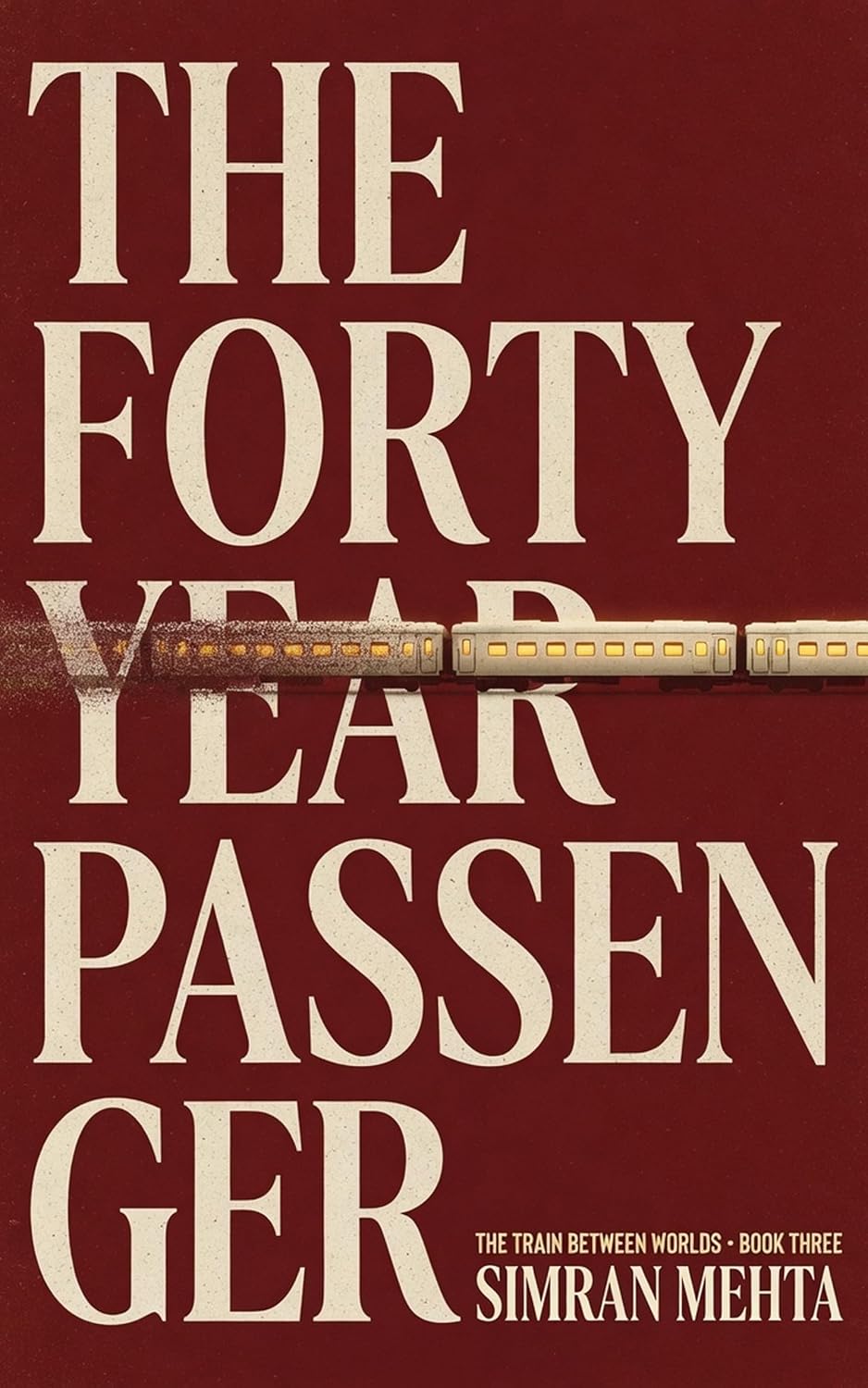
Book Three · The Train Between Worlds
The Forty-Year Passenger
A novel of a lost brother, a vanished mother, and the woman who has been mapping the train since 1981.
This one belongs in the third group — a novel about forgetting that never becomes a medical narrative, and that is unusually interested in the attention part rather than the illness.
Abel Quist carries tea every morning to a brother who no longer knows they are related. For fifteen years he also walked past a woman with an empty bucket and never once looked at her face. She had been four carriages from her son for eleven years. The book is far more interested in the second failure than the first.
A standalone novel — new readers can start here
What to expect from The Forty-Year Passenger
What it does and doesn't do with the subject:
- Not a diagnosis story
- There is no hospital, no doctor and no decline arc. The forgetting is structural, not clinical.
- The real subject
- The people we stop seeing — and the difference between caring for someone and actually looking at them.
- Closest comparison
- The Buried Giant for the allegory, Elizabeth Is Missing for the tenderness.
- Tone
- Cool and exact, morally argumentative. The antagonist is never quite a villain.
- Content notes
- Dementia, a sibling who no longer recognises the narrator, a missing son, exploitation of vulnerable people.
- Formats
- Kindle and paperback. Free to borrow with Kindle Unlimited.
FAQ
Questions readers ask
Do you have to read The Train Between Worlds books in order?
No. All three novels share a world, a currency and a train, but not a plot. Each one is written to work as a complete first book, and none of them spoils the others. Reading in publication order gives you the world in the order it was invented; starting anywhere else costs you nothing.
What is The Train Between Worlds actually about?
A train nobody remembers boarding, with more carriages than anyone has counted. Passengers stay because leaving is expensive: every door aboard costs one true memory of the person you would go back for. Not a fact or a date — the kind of memory you can walk around inside. The series follows three people paying that fare for very different reasons.
Is The Train Between Worlds free on Kindle Unlimited?
Yes. All three novels are free to borrow with a Kindle Unlimited subscription, and each can also be bought outright on Kindle. The Memory Fare and The Forty-Year Passenger are available in paperback too.
What should I read after The Midnight Library?
It depends which part of it you loved. If it was the premise — a place outside life where you get to examine your choices — you want speculative fiction with a clean central rule. If it was the feeling, you want quiet, consoling novels about second chances. Those are two different shelves, and the read-alike lists usually confuse them.
What are liminal space books?
Fiction set in places built for passing through and then never left — corridors, waiting rooms, stairwells, transit that never arrives. The defining feature is not horror but suspension: the architecture is doing something the characters cannot explain, and the rules of the place matter more than the plot.
Are there novels set entirely on a train?
A few. Most “train books” are murder mysteries that use a carriage as a locked room for a few hundred pages, or travel memoirs about real railways. Novels where the train is the whole world — no destination, no getting off — are much rarer, and they behave very differently.
What is the best novel about dementia?
There is no single answer, because readers come to these books for opposite reasons — some want the illness rendered accurately from the inside, some want the caregiver's side, and some want a story that is about forgetting without being a medical narrative at all. The right book depends on which of those you need.
Which book is about a mother searching for her missing daughter?
The Memory Fare, Book Two. Cora Marsh has spent six years at a railway lost property office looking for anything of her daughter's. When she finally boards the train on purpose, she learns that every door she opens to search for June costs her one real memory of her — and she will never know which one she paid.