Theme guide
Books About Losing a Child
Some readers come to this looking for recognition. Some are researching a novel. Each book below says plainly what it contains, so nothing ambushes you.
Short answer
For the aftermath — a family living on afterwards — read Ordinary People, Everything I Never Told You or Reservoir 13. For a search, read The Deep End of the Ocean or The Lovely Bones. For a real account rather than fiction, read Joan Didion's Blue Nights.
A note before the list. If you have lost a child yourself, the books here are not all the same kind of thing, and one of them — The Lovely Bones — opens with a violent death described by the child. It is included because it is the title most people are looking for, and flagged because it should be.
Everything below is marked for what it actually contains. Grief novels are frequently recommended without that, which is how people end up ambushed by a book someone promised would help.
Seven books about losing a child
-
Ordinary People
The aftermathA family in the year after the elder son drowns, told mostly through the surviving brother and the father. Quiet, precise, and unusually good on the specific damage of a family that will not say the thing out loud. No violence on the page.
-
Everything I Never Told You
The aftermathIt opens with the sentence that Lydia is dead, and then works backwards through a family's decade of expectations. The death itself is off-page. The best novel here on how a child can be loved and not seen at the same time.
-
Reservoir 13
The aftermathA girl goes missing near an English village, and the novel follows the village for thirteen years afterwards — the seasons, the sheep, the ordinary continuation. It refuses to resolve, deliberately. Extraordinary and very cold-water.
-
The Deep End of the Ocean
The searchA three-year-old is taken from a hotel lobby and the family lives nine years without an answer. Better than its reputation on the specific texture of a search that has no end date, and on what it does to the siblings.
-
The Light Between Oceans
The searchA lighthouse keeper and his wife, after repeated miscarriages, keep a baby who washes ashore. Grief that curdles into a terrible decision, and then the other mother's side of it. Devastating and fair to everyone.
-
The Lovely Bones
Content warningNarrated by fourteen-year-old Susie after her murder, watching her family from an afterlife. The opening chapter describes her rape and killing directly. Enormously loved by many readers and completely wrong for some — please go in knowing.
-
Blue Nights
MemoirDidion's account of her daughter Quintana's death, written after The Year of Magical Thinking. Fragmentary, self-interrogating, and unwilling to offer consolation. The book bereaved parents most often say felt honest.
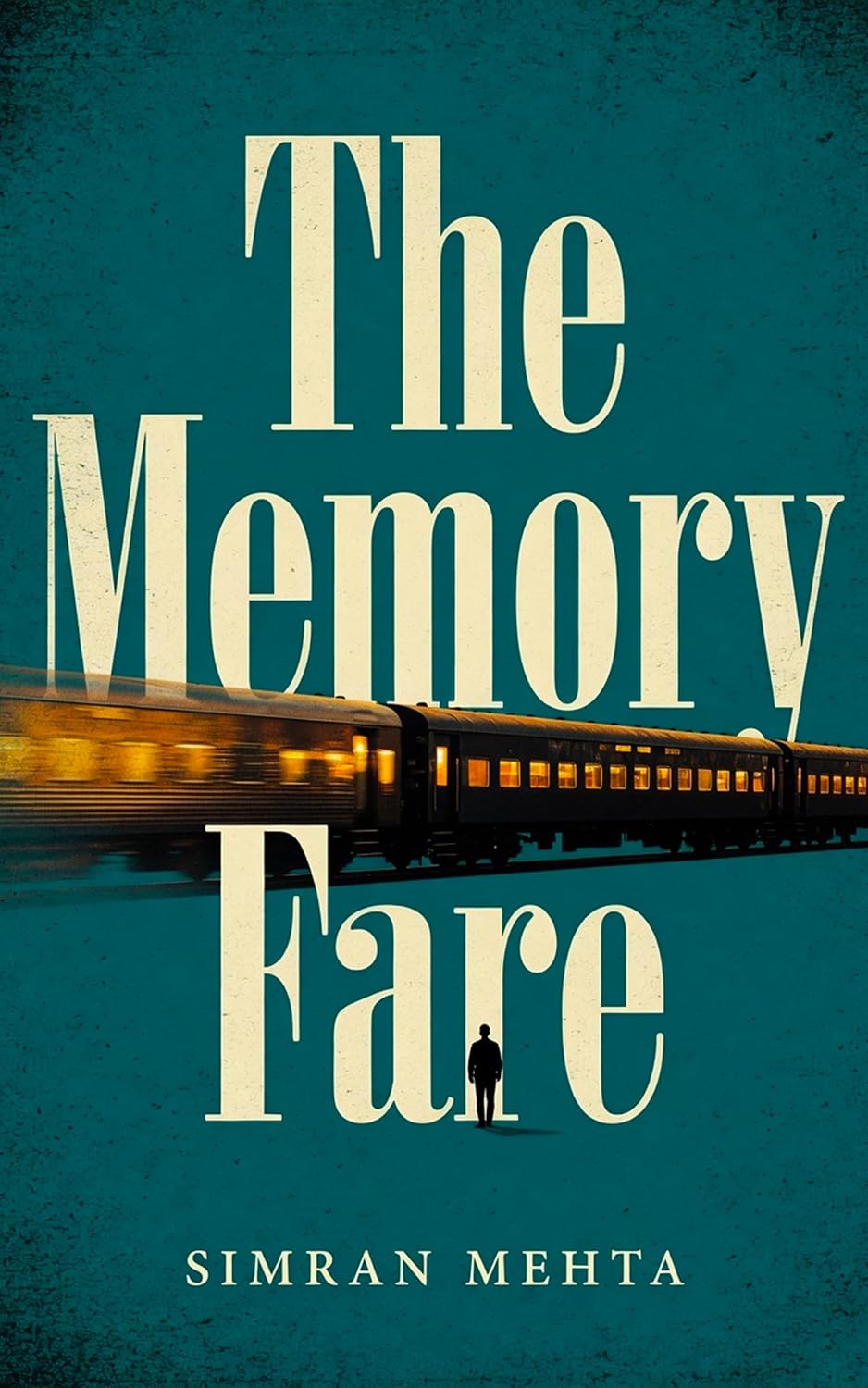
Book Two · The Train Between Worlds
The Memory Fare
A novel of a mother, a missing daughter, and the train that charges in memories.
The Memory Fare sits in the second group — a search — and it is upfront about being a speculative novel rather than a realistic one. There is no violence in it and the child is not dead.
Cora Marsh has spent six years signing the visitor book at a railway lost property office, going through unclaimed bags for anything of her daughter's, because it is the only thing she still knows how to do. Then she finds a tag in June's handwriting from a service that has never existed, and boards it on purpose.
A standalone novel — no need to have read Book One
What to expect from The Memory Fare
Stated plainly, because this page should:
- What happens
- A mother searches for her missing daughter. The search is the book.
- What doesn't
- No violence on the page. No assault. The child's fate is not revealed as a shock.
- The cost
- Every door Cora opens takes one real memory of June. She never learns which one she paid.
- Tone
- Quiet and devastating rather than harrowing. Closer to Before the Coffee Gets Cold than to a thriller.
- Who it is not for
- Readers who want realism, or who do not want a speculative frame around this subject.
- Formats
- Kindle and paperback. Free to borrow with Kindle Unlimited.
FAQ
Questions readers ask
Do you have to read The Train Between Worlds books in order?
No. All three novels share a world, a currency and a train, but not a plot. Each one is written to work as a complete first book, and none of them spoils the others. Reading in publication order gives you the world in the order it was invented; starting anywhere else costs you nothing.
What is The Train Between Worlds actually about?
A train nobody remembers boarding, with more carriages than anyone has counted. Passengers stay because leaving is expensive: every door aboard costs one true memory of the person you would go back for. Not a fact or a date — the kind of memory you can walk around inside. The series follows three people paying that fare for very different reasons.
Is The Train Between Worlds free on Kindle Unlimited?
Yes. All three novels are free to borrow with a Kindle Unlimited subscription, and each can also be bought outright on Kindle. The Memory Fare and The Forty-Year Passenger are available in paperback too.
What should I read after The Midnight Library?
It depends which part of it you loved. If it was the premise — a place outside life where you get to examine your choices — you want speculative fiction with a clean central rule. If it was the feeling, you want quiet, consoling novels about second chances. Those are two different shelves, and the read-alike lists usually confuse them.
What are liminal space books?
Fiction set in places built for passing through and then never left — corridors, waiting rooms, stairwells, transit that never arrives. The defining feature is not horror but suspension: the architecture is doing something the characters cannot explain, and the rules of the place matter more than the plot.
Are there novels set entirely on a train?
A few. Most “train books” are murder mysteries that use a carriage as a locked room for a few hundred pages, or travel memoirs about real railways. Novels where the train is the whole world — no destination, no getting off — are much rarer, and they behave very differently.
What is the best novel about dementia?
There is no single answer, because readers come to these books for opposite reasons — some want the illness rendered accurately from the inside, some want the caregiver's side, and some want a story that is about forgetting without being a medical narrative at all. The right book depends on which of those you need.
Which book is about a mother searching for her missing daughter?
The Memory Fare, Book Two. Cora Marsh has spent six years at a railway lost property office looking for anything of her daughter's. When she finally boards the train on purpose, she learns that every door she opens to search for June costs her one real memory of her — and she will never know which one she paid.