Read-alike guide
Books Like Before the Coffee Gets Cold
It isn't really a time-travel book. It's a book about a constraint — and the constraint is why it makes people cry.
Short answer
For more of the same café, read Kawaguchi's own sequels — Tales from the Cafe, Before Your Memory Fades, Before We Say Goodbye. For the same feeling from a different shelf, read What You Are Looking For Is in the Library, The Kamogawa Food Detectives or Sweet Bean Paste. For the same machinery — one impossible rule, rigorously enforced — read The Midnight Library or The Memory Police.
People describe Before the Coffee Gets Cold as cosy, which undersells it. The café is not comforting; the rules are brutal. You cannot change the present. You must sit in one seat. You must be back before the coffee cools. Everyone who sits down knows in advance that the trip is futile.
That is what makes it work. The characters go anyway, and the book is about why they go anyway. So the best read-alikes are not the ones with time travel in them — they're the ones with a small, fixed, unfair rule and someone who accepts it.
Seven novels for Before the Coffee Gets Cold readers
-
Tales from the Cafe
The same caféThe direct sequel — four more visitors, same chair, same rules. If you finished the first and simply wanted more of it, start here rather than anywhere else on this list. Before Your Memory Fades and Before We Say Goodbye continue it.
-
What You Are Looking For Is in the Library
The same feelingFive people at a crossroads visit a community library, and a curiously perceptive librarian gives each of them a book they didn't ask for. Structurally almost identical to Kawaguchi — linked stories, one fixed location, one gatekeeper — and just as gentle.
-
The Kamogawa Food Detectives
The same feelingA Kyoto restaurant that recreates a dish from your past, if you can describe it well enough. Same premise as the café — a small business that repairs memory — with the food doing the emotional work.
-
Sweet Bean Paste
The same feelingAn elderly woman with damaged hands teaches a dorayaki vendor to make bean paste properly. Quieter and sadder than the others, with a real historical injustice underneath the gentleness. The best-written book on this list.
-
The Memory Police
The same machineryOn an island, things vanish — hats, roses, novels — and everyone forgets them by morning. A single implacable rule, applied without explanation, and characters who adapt rather than rebel. Far colder than Kawaguchi, and remarkable.
-
The Midnight Library
The same machineryA room between life and death, one rule about what you may try. More explicit about its message than Kawaguchi ever is, which some readers want and others don't. The obvious next read if you liked being told the point.
-
Days at the Morisaki Bookshop
The same feelingA young woman moves into the room above her uncle's second-hand bookshop after a breakup. Almost no plot and no speculative element at all — pure atmosphere. Read it if what you wanted from the café was the quiet.
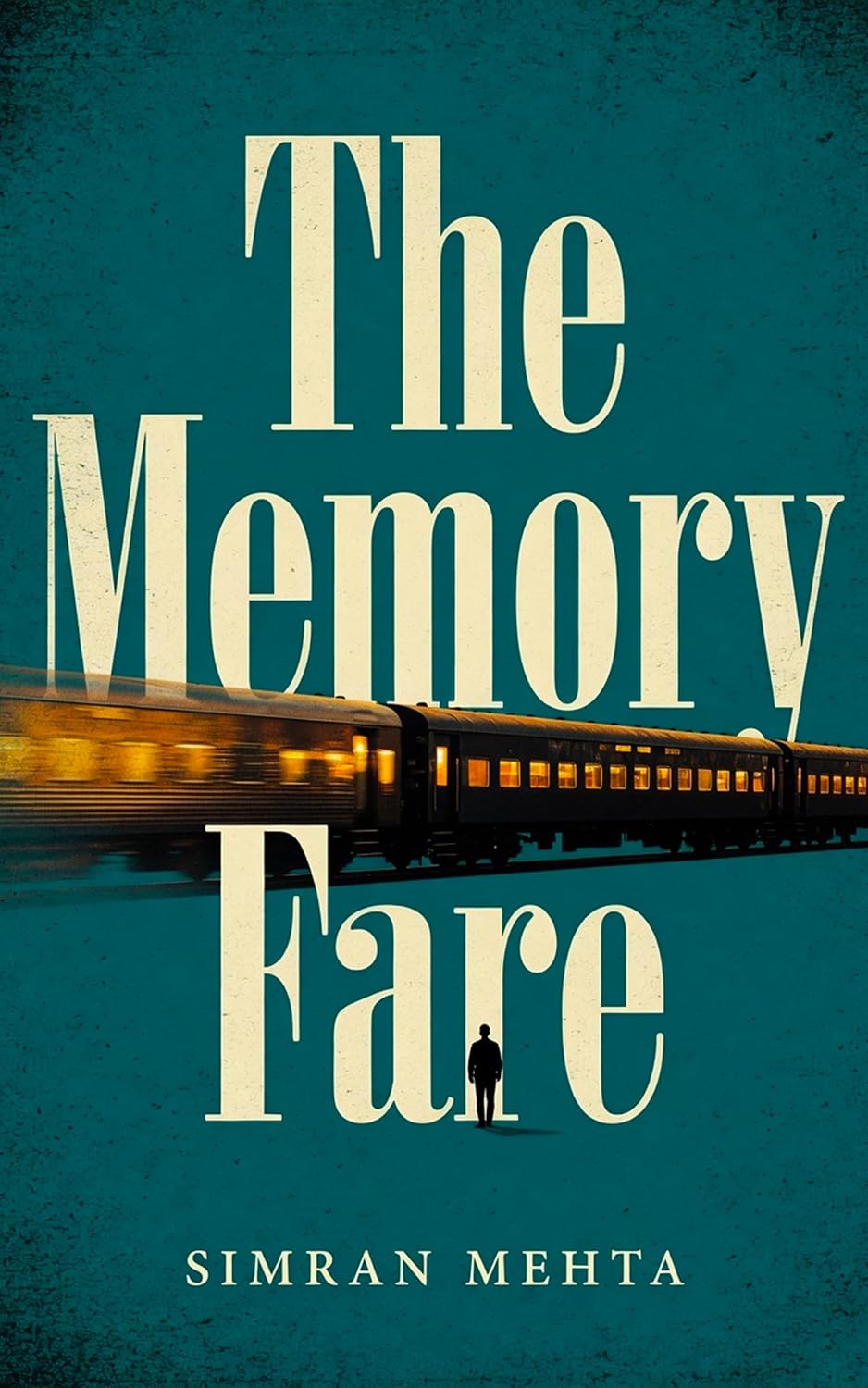
Book Two · The Train Between Worlds
The Memory Fare
A novel of a mother, a missing daughter, and the train that charges in memories.
If the part that stayed with you was the fairness of the rule — stated up front, never bent, and paid anyway — then The Memory Fare is the book here to read.
The conductor explains the fare before Cora can change her mind. Every door she opens looking for her daughter costs one true memory of her. She will not feel it go, and she will never know which one she paid. She boards anyway.
A standalone novel — no need to have read Book One
What to expect from The Memory Fare
Where it lines up with Kawaguchi, and where it goes further:
- Same as Before the Coffee Gets Cold
- One rule, explained in advance, never bent. A protagonist who accepts a bad bargain because the alternative is doing nothing.
- Different
- It is a single sustained journey rather than linked short stories, and it does not soften the ending.
- Tone
- Quiet and devastating. Readers who cried at the café tend to find this one harder.
- Central question
- If loving someone meant forgetting them, would you still do it?
- Content notes
- A missing child, parental grief, prolonged searching. No on-page violence.
- Formats
- Kindle and paperback. Free to borrow with Kindle Unlimited.
FAQ
Questions readers ask
Do you have to read The Train Between Worlds books in order?
No. All three novels share a world, a currency and a train, but not a plot. Each one is written to work as a complete first book, and none of them spoils the others. Reading in publication order gives you the world in the order it was invented; starting anywhere else costs you nothing.
What is The Train Between Worlds actually about?
A train nobody remembers boarding, with more carriages than anyone has counted. Passengers stay because leaving is expensive: every door aboard costs one true memory of the person you would go back for. Not a fact or a date — the kind of memory you can walk around inside. The series follows three people paying that fare for very different reasons.
Is The Train Between Worlds free on Kindle Unlimited?
Yes. All three novels are free to borrow with a Kindle Unlimited subscription, and each can also be bought outright on Kindle. The Memory Fare and The Forty-Year Passenger are available in paperback too.
What should I read after The Midnight Library?
It depends which part of it you loved. If it was the premise — a place outside life where you get to examine your choices — you want speculative fiction with a clean central rule. If it was the feeling, you want quiet, consoling novels about second chances. Those are two different shelves, and the read-alike lists usually confuse them.
What are liminal space books?
Fiction set in places built for passing through and then never left — corridors, waiting rooms, stairwells, transit that never arrives. The defining feature is not horror but suspension: the architecture is doing something the characters cannot explain, and the rules of the place matter more than the plot.
Are there novels set entirely on a train?
A few. Most “train books” are murder mysteries that use a carriage as a locked room for a few hundred pages, or travel memoirs about real railways. Novels where the train is the whole world — no destination, no getting off — are much rarer, and they behave very differently.
What is the best novel about dementia?
There is no single answer, because readers come to these books for opposite reasons — some want the illness rendered accurately from the inside, some want the caregiver's side, and some want a story that is about forgetting without being a medical narrative at all. The right book depends on which of those you need.
Which book is about a mother searching for her missing daughter?
The Memory Fare, Book Two. Cora Marsh has spent six years at a railway lost property office looking for anything of her daughter's. When she finally boards the train on purpose, she learns that every door she opens to search for June costs her one real memory of her — and she will never know which one she paid.