Theme guide
The Best Liminal Space Books
Empty corridors, stairwells at 3am, a station with no departures board. Fiction about places built for passing through, and never left.
Short answer
The essential ones are Piranesi (vast, warm, endless halls), House of Leaves (a corridor that shouldn't fit), I Who Have Never Known Men (a room with no explanation) and The Third Policeman (a country that doesn't obey physics). If you want the backrooms feeling specifically, start with House of Leaves; if you want it sad rather than scary, start with Piranesi.
A liminal space is architecture with the people taken out: the airport at 4am, the school in August, a stairwell that goes down further than the building is tall. The internet found the aesthetic first, but novels have been doing it for a century.
The genre is often filed as horror, and that is a mistake. The defining feeling is not fear — it is suspension. Nothing is arriving. The rules of the place matter more than the plot, and the characters are usually far calmer about it than you'd be.
Below, sorted from gentlest to most unsettling.
Eight liminal space novels
-
Piranesi
GentleEndless flooded halls full of statues, catalogued lovingly by a man who believes the House is benevolent. The warmest book ever written about being trapped somewhere infinite, and the one that made this whole category mainstream.
-
The Starless Sea
GentleAn underground harbourless sea, a library of other people's lives, doors painted onto walls. Almost entirely atmosphere. Read it for the rooms, not the story.
-
Convenience Store Woman
GentleNo speculative element at all — just a woman who has worked in the same konbini for eighteen years and finds its fluorescent, scripted, always-identical world the only place she makes sense. The most literal liminal space in fiction: a shop designed for people passing through, treated as a home.
-
The Third Policeman
StrangeA rural Ireland where bicycles and their riders slowly exchange atoms, and a police station whose walls are the wrong distance apart. Very funny until you work out where the narrator is.
-
The Castle
StrangeA village, an institution on the hill, and a man who will never reach it. The origin point for every corridor novel that followed, and still the most frustrating in the best sense.
-
Annihilation
UnsettlingArea X, and a tower that descends. The prose gets stranger as the expedition goes deeper, which is the whole trick. Pure liminal dread, tightly controlled.
-
I Who Have Never Known Men
UnsettlingA cage underground, forty women, no explanation — then an empty world above. Devastating and very short. The purest example of a book that refuses to tell you why the place exists.
-
House of Leaves
UnsettlingThe ur-text for the backrooms era: a hallway that appears in a family home and keeps going. The layout of the book itself becomes the corridor. Genuinely hard to read at points, on purpose.
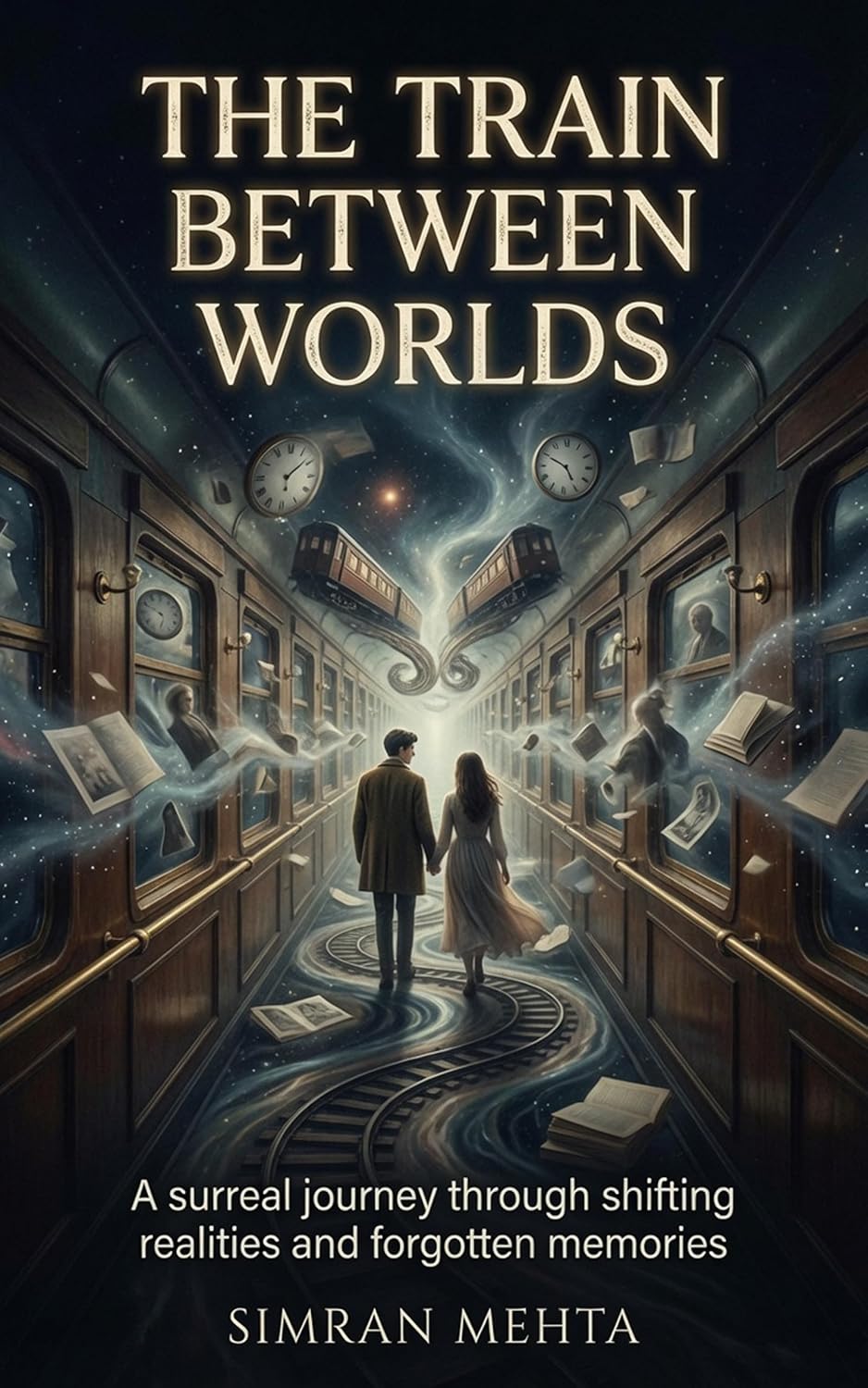
Book One · The Train Between Worlds
The Train Between Worlds
Lost on an endless train where realities blur, memories surface, and every choice reveals who you truly are.
A train is the most liminal object there is — a corridor that moves, built entirely for the state of being between two places.
The Train Between Worlds takes that literally. No destination board. No memory of boarding. Windows showing quiet countryside one moment and impossible dreamscapes the next, and carriages that warp time and push back when you try to reach the end of the track.
Where the line begins — a complete story in itself
What to expect from The Train Between Worlds
How it sits against the books above:
- Closest to
- Piranesi for the tone, Annihilation for the way the space resists you.
- The space
- A train with more carriages than anyone has counted, no destination and no way to confirm it's moving.
- The rule
- Every door aboard costs one true memory of the person you'd go back for.
- Scary or sad?
- Sad. Unsettling in places, but this is not horror and there is no monster.
- Content notes
- Memory loss, dissociation, psychological disorientation.
- Formats
- Kindle. Free to borrow with Kindle Unlimited.
FAQ
Questions readers ask
Do you have to read The Train Between Worlds books in order?
No. All three novels share a world, a currency and a train, but not a plot. Each one is written to work as a complete first book, and none of them spoils the others. Reading in publication order gives you the world in the order it was invented; starting anywhere else costs you nothing.
What is The Train Between Worlds actually about?
A train nobody remembers boarding, with more carriages than anyone has counted. Passengers stay because leaving is expensive: every door aboard costs one true memory of the person you would go back for. Not a fact or a date — the kind of memory you can walk around inside. The series follows three people paying that fare for very different reasons.
Is The Train Between Worlds free on Kindle Unlimited?
Yes. All three novels are free to borrow with a Kindle Unlimited subscription, and each can also be bought outright on Kindle. The Memory Fare and The Forty-Year Passenger are available in paperback too.
What should I read after The Midnight Library?
It depends which part of it you loved. If it was the premise — a place outside life where you get to examine your choices — you want speculative fiction with a clean central rule. If it was the feeling, you want quiet, consoling novels about second chances. Those are two different shelves, and the read-alike lists usually confuse them.
What are liminal space books?
Fiction set in places built for passing through and then never left — corridors, waiting rooms, stairwells, transit that never arrives. The defining feature is not horror but suspension: the architecture is doing something the characters cannot explain, and the rules of the place matter more than the plot.
Are there novels set entirely on a train?
A few. Most “train books” are murder mysteries that use a carriage as a locked room for a few hundred pages, or travel memoirs about real railways. Novels where the train is the whole world — no destination, no getting off — are much rarer, and they behave very differently.
What is the best novel about dementia?
There is no single answer, because readers come to these books for opposite reasons — some want the illness rendered accurately from the inside, some want the caregiver's side, and some want a story that is about forgetting without being a medical narrative at all. The right book depends on which of those you need.
Which book is about a mother searching for her missing daughter?
The Memory Fare, Book Two. Cora Marsh has spent six years at a railway lost property office looking for anything of her daughter's. When she finally boards the train on purpose, she learns that every door she opens to search for June costs her one real memory of her — and she will never know which one she paid.